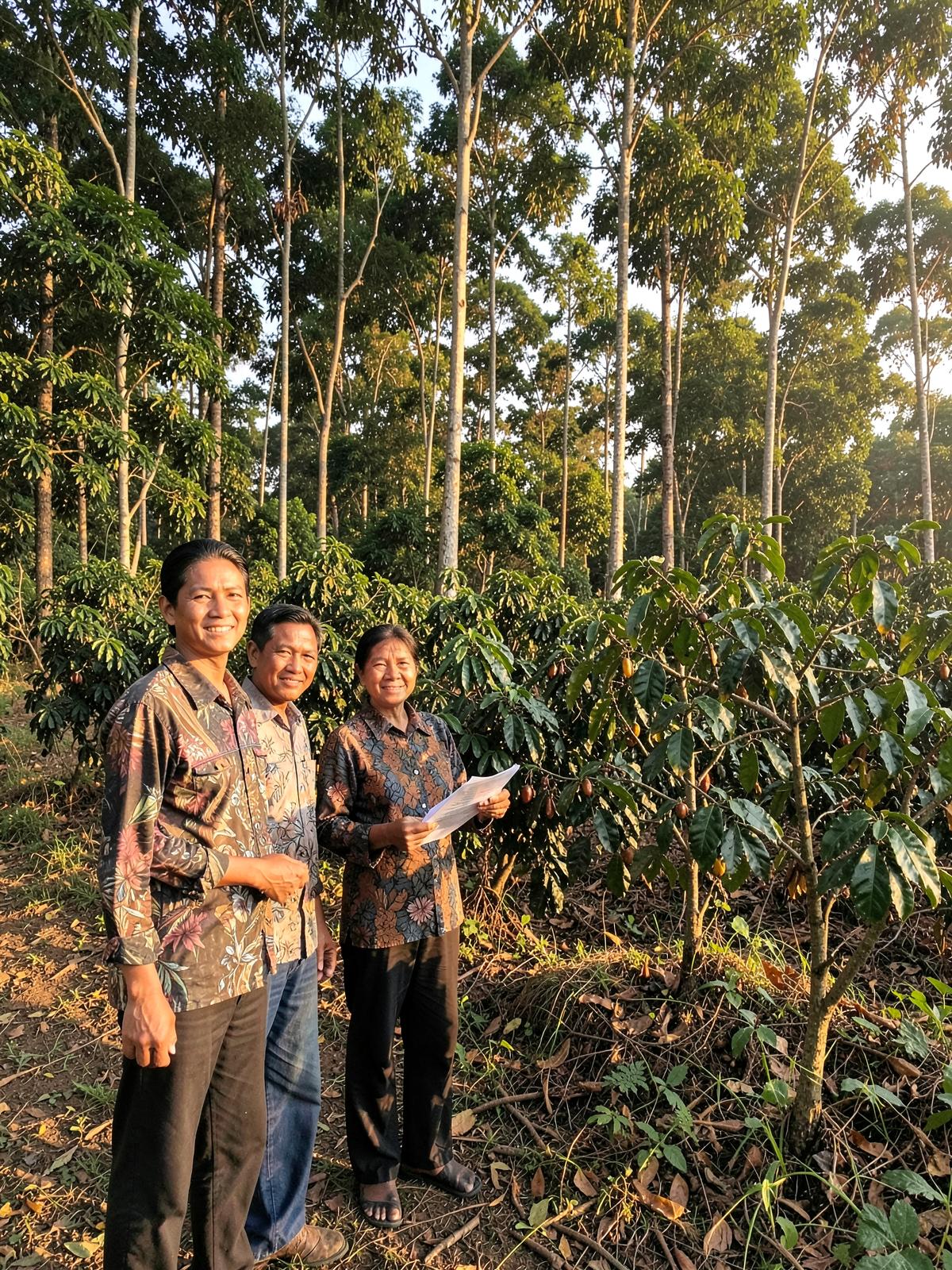
Coffee that pays for shade
Shade trees cost a farmer yield today. In Lampung, the programme is connecting farmer groups to buyers who pay for the canopy.
LampungPartnershipPeople
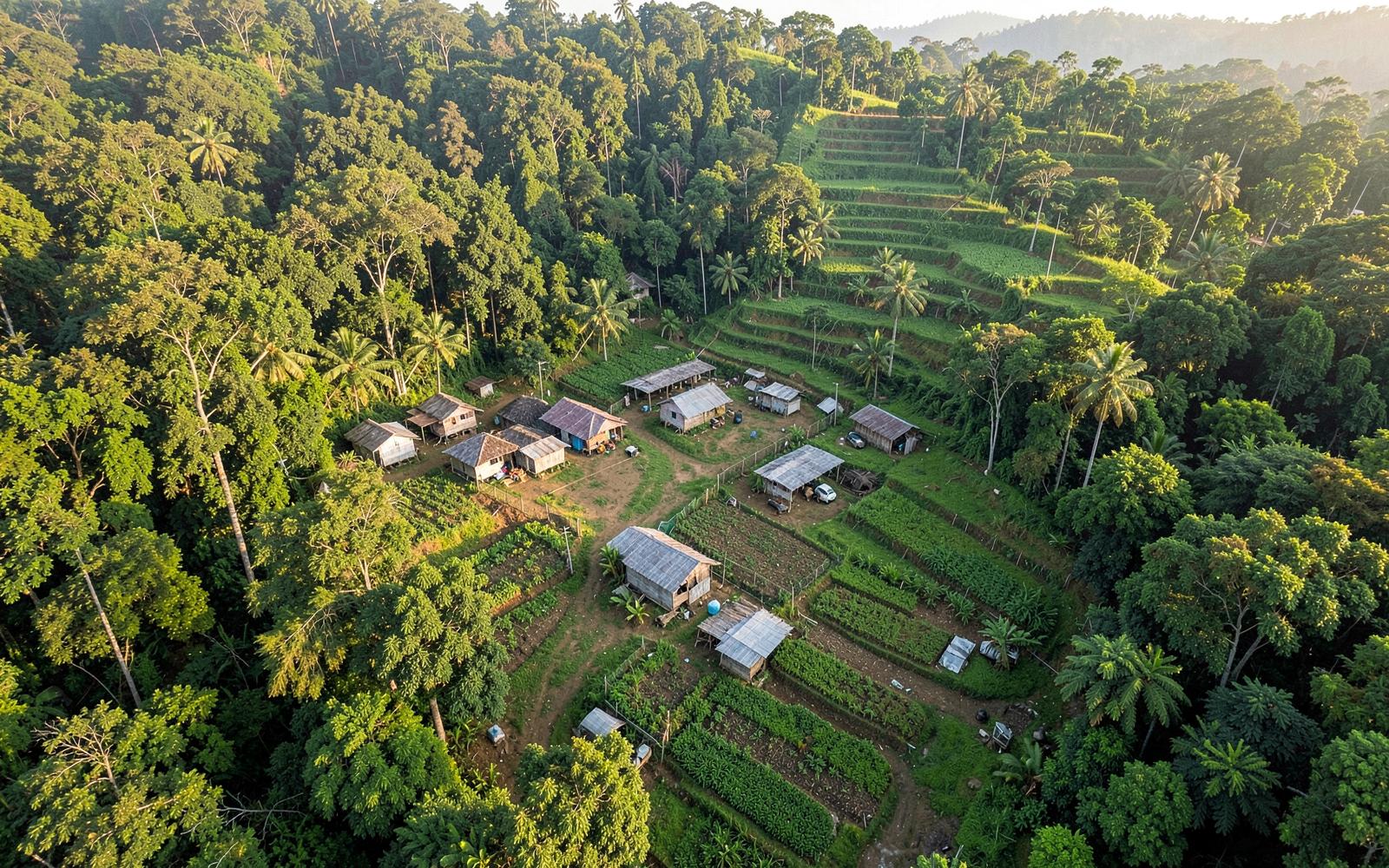
Protection forest farmed by coffee and pepper smallholders who have been there for two generations.
Located at the southern tip of Sumatra, Lampung is a landscape where forest conservation, biodiversity protection, and community livelihoods are closely interconnected. The province covers approximately 33,575 km², with around 1.00 million hectares of forest area. The landscape includes protected forests, production forests, conservation areas, and forest areas managed by communities. Within the provincial government’s authority, approximately 564,954 hectares are identified for forest management, including Wan Abdul Rachman Grand Forest Park, protection forests, and production forests.
Forest management faces multiple pressures, including deforestation, land-use change, forest and land fires, forest-related crimes, and tenure conflicts. Deforestation event of approximately 16,700 hectares in 2014–2015, while the highest recorded forest-fire incidence during 2011–2019 occurred in 2015, with 85 incidents.
Community participation is central to Lampung’s forest landscape. By March 2024, the Government had issued 381 Social Forestry approvals covering 206,086.41 hectares, managed by approximately 93,344 households. These areas provide an important foundation for strengthening community-based forest management and sustainable livelihoods.
Forest area
Provincial Forest Management Authority
Community-Managed Forest Land
Deforestation Recorded in 2014–2015
Forest Emission Reference Level
Emission Reduction Performance Target
Lampung is a strategic landscape for advancing REDD+ through stronger forest governance, community participation, and sustainable livelihoods. Persistent pressures on forests, unresolved tenure issues, and limited institutional and financial capacity highlight the need for an integrated approach that connects emission reduction with inclusive local development.
Addressing forest pressures. Strengthening forest protection and fire prevention is essential to tackling deforestation, degradation, and unsustainable land-use practices.
Empowering local communities. Strengthening Social Forestry, community institutions, and sustainable forest-based livelihoods is key to securing long-term conservation outcomes.
Strengthening forest governance. Enhancing KPH capacity, forest management planning, inter-agency coordination, and law enforcement is critical for more effective forest management. Mobilising resources for climate action. RBP provides an opportunity to complement limited public funding and accelerate forest rehabilitation, ecosystem restoration, and emission reduction initiatives. Linking conservation with local development. Integrating forest protection with community economic development, fire prevention, and climate resilience can deliver lasting environmental and socioeconomic benefits.
17
Strengthening the operational capacity and institutional management of 17 Forest Management Units (KPH). This includes improved forest management planning, stronger community institutions, and enhanced forest protection to reduce illegal forestry activities.
4
Establishment of 4 Community Fire Prevention Groups (MPA), with 180 members trained in forest and land fire prevention and suppression, strengthening community capacity to protect forest landscapes.
23
Implementation of 23 routine forest patrols across 17 Forest Management Unit (KPH) working areas, covering 541,158.50 hectares to strengthen forest monitoring, protection, and law enforcement.
24.99
24.99 Hectares of Biodiversity Park under Improved Management. Strengthened management of Lampung Biodiversity Park (Taman Kehati) through improved planning, enrichment planting of rare and diverse plant species, infrastructure and equipment provision, capacity building, and regular monitoring.
Community-Managed Forest Land
The programme focuses on improving forest and land management in Lampung Province, with the overarching aim of reducing greenhouse gas emissions from deforestation and forest degradation, enhancing forest carbon stocks, strengthening forest-dependent communities’ livelihoods, and improving forestry institutions at both provincial and local levels. To achieve these objectives, the programme promotes more efficient land use, strengthens sustainable forest management systems, and supports forest restoration to expand forest and land cover. It also facilitates community participation in developing sustainable livelihoods and local enterprises, builds capacity for sustainable business management, and strengthens community-led measures to prevent forest and land fires and protect forest resources. In addition, the programme supports the preparation of technical and planning documents to guide sustainable land management and Social Forestry development, both within and outside designated forest areas. Through these integrated interventions, the programme is expected to contribute to improving Lampung’s Environmental Quality Index for Land Cover (IKTL), from a baseline of 32.70 in 2021 towards the 2024 target of 34.20, as set out in the Provincial Forestry Agency’s 2019–2024 Strategic Plan. It is also expected to contribute to the implementation of Lampung’s Regional Action Plan for Greenhouse Gas Emission Reduction (RAD-GRK), with an estimated contribution of 0.002% towards the province’s 0.05% emission reduction target for 2024.
Strengthening forest governance and protection
The programme supports KPH planning and institutional capacity, forest patrols, community-based fire prevention, and coordination among provincial institutions and stakeholders. These activities aim to improve forest management and strengthen protection across forest landscapes.
Restoring ecosystems and conserving biodiversity
Forest and land rehabilitation activities are complemented by biodiversity conservation, ecosystem enrichment, and monitoring. Restoration efforts in Wan Abdul Rachman Grand Forest Park and Lampung Biodiversity Park provide opportunities to improve ecosystem condition and strengthen local conservation practices.
Connecting forest management with livelihoods
Through Integrated Area Development, the programme facilitates coordination across sectors and supports community groups in developing sustainable economic activities. Agroforestry and silvopasture are intended to strengthen livelihood opportunities while promoting more sustainable land management. Integrating local climate action The programme strengthens ProKlim implementation through capacity development, low-emission agriculture, waste management, emissions measurement, and demonstration activities. These interventions connect local adaptation and mitigation practices with broader provincial climate objectives.
Shade trees cost a farmer yield today. In Lampung, the programme is connecting farmer groups to buyers who pay for the canopy.
Planting numbers are easy to report. In Lampung, the programme publishes how many shade trees are still alive two years later.
Seven hundred households in West Lampung farmed protection forest for two generations. The paperwork has finally caught up.