An income that does not need the peat dry
A household that earns from drained peat has a reason to keep it drained. In Central Kalimantan, the programme is supporting paludiculture and fisheries instead.
Central KalimantanPeopleClimate
Central Kalimantan’s forest landscapes are central to Indonesia’s climate ambitions. Through forest restoration, sustainable forest management, community livelihoods and stronger REDD+ governance, the programme supports provincial efforts to reduce emissions and strengthen the long-term sustainability of forest and land management.
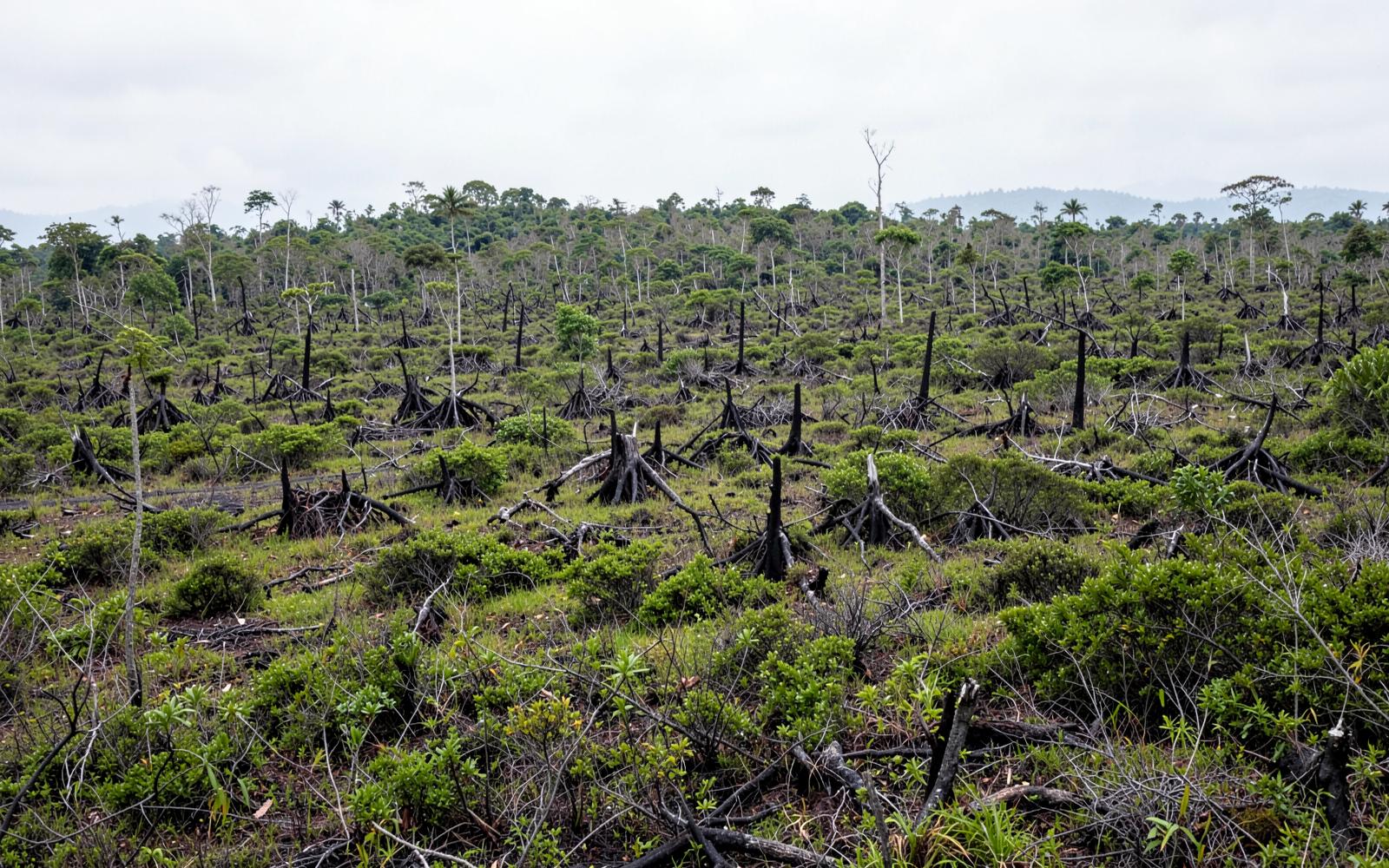
Located in the heart of Borneo, Central Kalimantan spans approximately 15.33 million hectares, making it one of Indonesia’s largest provinces. Its landscape stretches from lowland tropical rainforests and extensive peat swamp ecosystems in the south to hilly terrain in the north and southwest. The province has approximately 12 million hectares of designated forest areas, representing around 75% of its land territory, while recorded forest cover stands at approximately 5.15 million hectares. These landscapes support remarkable biodiversity, including iconic species such as the Bornean orangutan and proboscis monkey, while providing essential ecosystem services for surrounding communities and the wider region. Central Kalimantan’s forests and peatlands are particularly significant for climate regulation and carbon storage. Its peat swamp ecosystems, especially across the southern and central parts of the province, hold substantial carbon stocks and play an important role in maintaining hydrological balance. However, these landscapes face persistent pressures from deforestation, forest degradation, land conversion, plantation expansion, extractive activities, and recurring forest and land fires. The province’s historical deforestation averaged approximately 116,479 hectares per year during 2011–2020, according to the forest-type analysis presented in the provincial REDD+ action plan. This highlights the scale of the challenge in maintaining forest cover and reducing emissions from land-use change. Managing this landscape requires more than forest protection alone. It calls for stronger forest governance, effective institutions at the provincial and site levels, landscape restoration, fire prevention, and meaningful participation of local and customary communities. Central Kalimantan has an established foundation for REDD+ implementation, having been designated as Indonesia’s national REDD+ pilot province in 2010 and subsequently adopting its Provincial Strategy and Action Plan for REDD+ through Governor Regulation No. 10 of 2012. Building on this foundation, the province’s REDD+ agenda provides an opportunity to align sustainable forest management, climate mitigation, and community development with Indonesia’s broader commitments under the Enhanced NDC and FOLU Net Sink 2030.
Total provincial land area
Forest cover area (approximately 75% of the province)
Conservation area
Forest Reference Emision Level (FREL)
The province’s historical deforestation
The province’s extensive forest estate requires coordinated protection, restoration and sustainable management.
Households earning without drainage are the long-term guardians of the dome.
This is where patient, honest work shows what restoration really takes.
Hectares rehabilitated
Forest Area Targeted for Sustainable Management through strengthened forest governance, forest protection, fire prevention, improved management planning, and enhanced Forest Management Unit (FMU) and Tahura capacity.
Forest patrols
REDD+ Policy and Implementation Documents. Supporting stronger provincial REDD+ and NDC implementation through improved policies, institutional arrangements, and technical instruments.
Hectares community-managed
The RBP REDD+ GCF Output 2 Programme in Central Kalimantan aims to accelerate Indonesia’s achievement of its greenhouse gas (GHG) emission reduction commitments under the Nationally Determined Contribution (NDC). At the provincial level, the programme supports Central Kalimantan’s ambition to achieve a GHG emissions level of -140 million tonnes of CO₂ equivalent (MtCO₂e) by 2030. To contribute to this long-term ambition, the programme focuses on a set of complementary interventions that deliver tangible results in the short term while strengthening the foundations for sustained REDD+ implementation. These include expanding forest and land rehabilitation, strengthening biodiversity conservation and management, reducing forest disturbances and forest and land fires, improving communities’ access to and sustainable use of natural resources, and reinforcing the institutional capacity of the Provincial REDD+ Working Group. The programme also supports the development and strengthening of policy and planning instruments for REDD+ implementation in Central Kalimantan. Together, these efforts are intended to strengthen forest governance, promote sustainable landscape management, enhance community participation, and contribute to Indonesia’s broader climate commitments.
Forest Protection and Fire Prevention
Strengthen forest protection hrough patrols, fire prevention, forest monitoring, and improved forest management practices to reduce deforestation, degradation, and other pressures on forest landscapes.
Forest and Land Restoration
Support forest and land rehabilitation, including degraded mineral lands and peatlands, to restore ecosystem functions, enhance forest carbon stocks, and strengthen landscape resilience.
Social Forestry and Community Enterprises
Strengthening social forestry institutions, supporting management plans, developing community forest-based businesses, providing productive equipment and facilitating market promotion and buyer engagement.
Strengthen REDD+ Architecture
Strengthening the provincial REDD+ Working Group, preparing technical and policy documents, supporting FREL/FRL and MRV systems, improving safeguards and benefit-sharing arrangements, and strengthening greenhouse gas inventories.
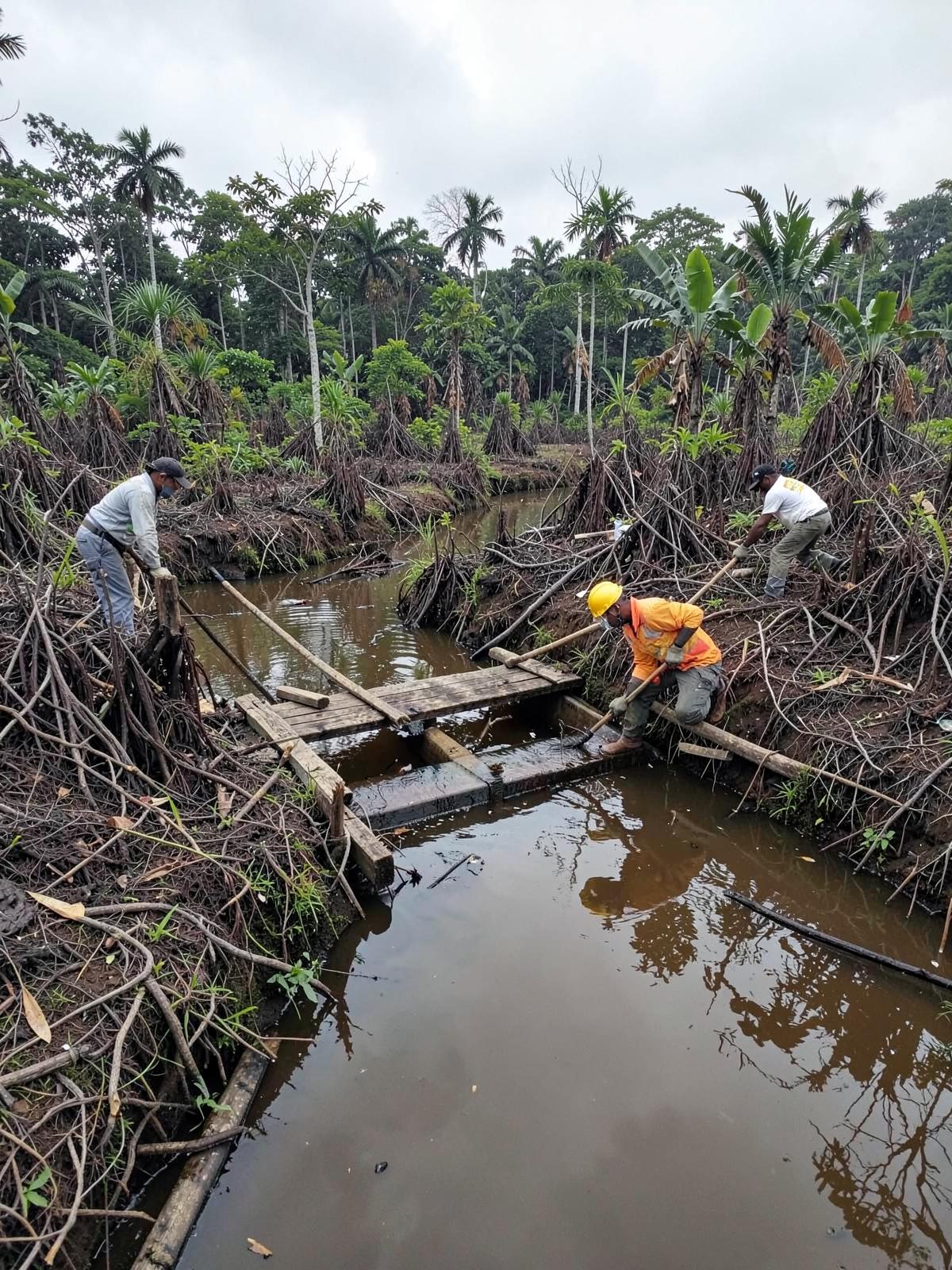
A household that earns from drained peat has a reason to keep it drained. In Central Kalimantan, the programme is supporting paludiculture and fisheries instead.
Trees planted on dry peat do not survive the next fire season. In Central Kalimantan, the programme plants only where the water table allows, and says where it does not.
The crews closing a drainage network in Pulang Pisau are working against a scheme abandoned in the 1990s.