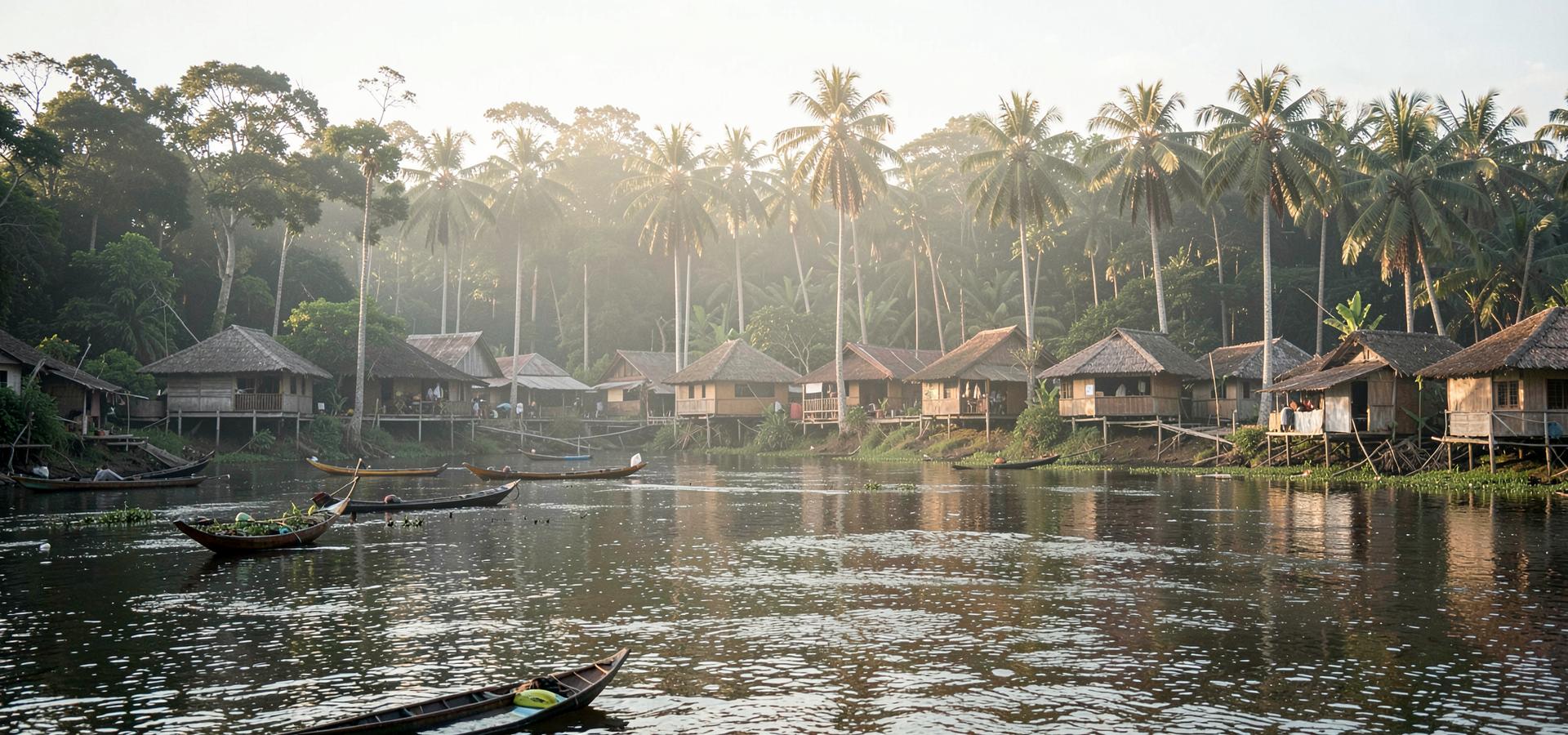
The steepest plots, back to canopy
On the slopes above the safe farming contour, the programme is replanting deep-rooting native trees and publishing how many survive.
West JavaClimatePeople
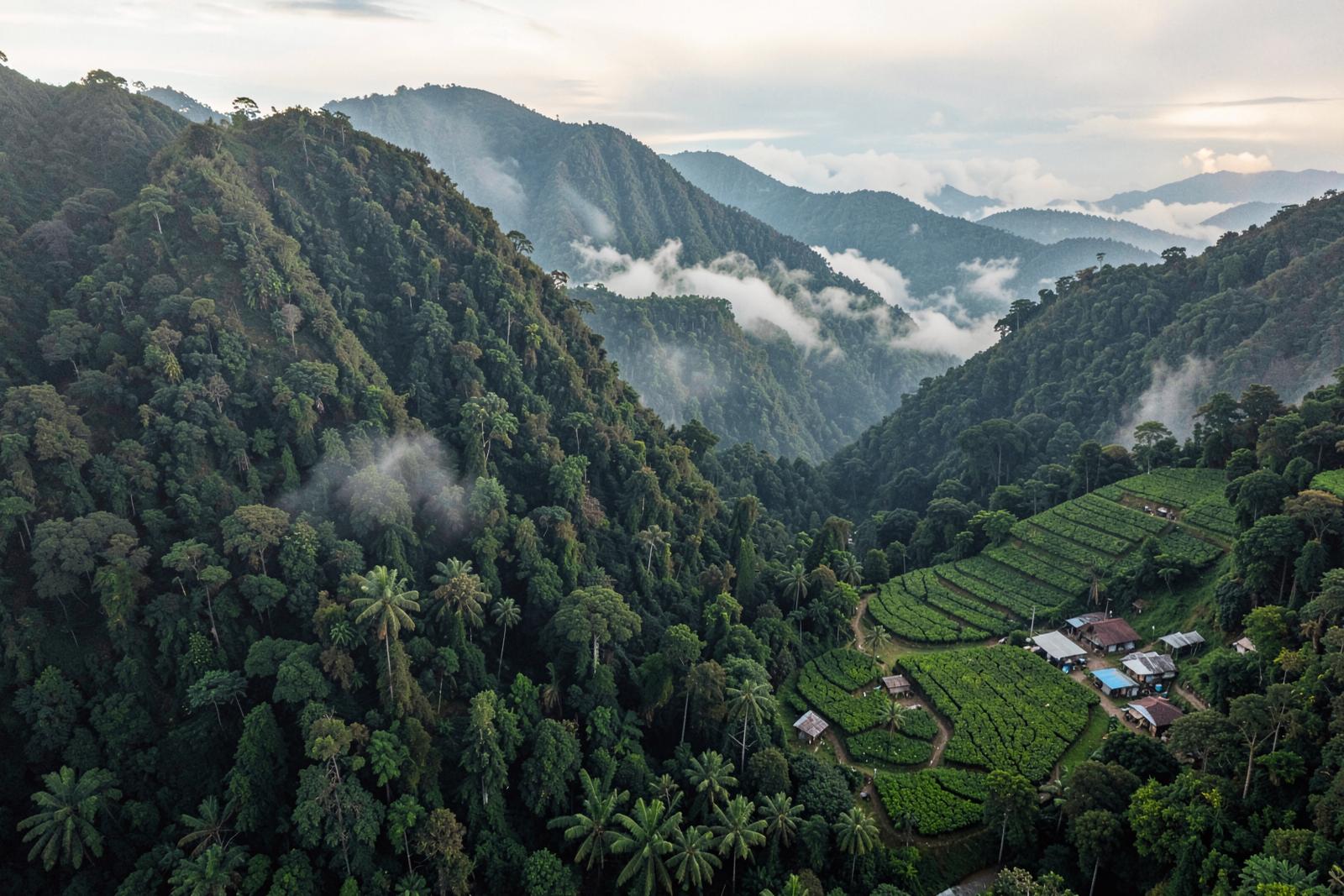
Montane forest above the most densely populated landscape in Indonesia, holding the water that thirty million people downstream depend on.
West Java has less forest left than any programme province, and more people relying on what remains. The remaining montane blocks sit on steep volcanic slopes above towns, reservoirs and irrigated rice.
The programme works on the forest edge itself: agreements with villages that farm right up to the boundary, and catchment protection rules written by those villages rather than for them.
This is the landscape where the argument for standing forest is made in water, not carbon, and it is the easiest argument to win locally.
Forest landscape under programme intervention
Working area
Upper catchment under village protection rules
Steep slope replanted
Households in agreements
Village regulations adopted
Avoided emissions
Not published. The provincial baseline is under review and no figure will be shown until it is settled.
The forest on these slopes is the water supply for the towns and rice fields below.
Few forests left anywhere in the programme are relied on by so many people.
Villages write their own catchment rules, so the rules are kept.
Here the case for standing forest is made in clean water, and it wins locally.
10%
10% reduction in forest fire incidents, backed by 10 forest patrols and 3 new Community Fire Prevention Groups (MPA)
25ha
25 ha of forest rehabilitated
500ha
500 ha of forest and land under sustainable community management
1
1 provincial NDC document developed; 3 ProKlim villages supported
Social Forestry Business Groups (KUPS) upgraded to at least Gold category
Market access support for community forest enterprises, including coffee agroforestry and ecotourism
Upper catchment under village protection rules
Garut's pressure is demographic as much as ecological: population growth is pushing harder on a forest that's otherwise held stable. The programme pairs fire defence with an economic argument: better market access for coffee and ecotourism gives communities a reason to manage the forest rather than convert it.
Fix the upper catchment boundary on the ground
Mark and agree the forest boundary with each bordering village, with the agreed line recorded in a document the village holds.
Turn the steepest plots back into canopy
Replant deep-rooting native species on slopes above the safe farming contour, with survival counts published rather than planting counts.
Make edge farming viable without expanding
Improve yield and market access on existing plots so that farming income does not depend on taking more slope.
On the slopes above the safe farming contour, the programme is replanting deep-rooting native trees and publishing how many survive.
Thirty million people live downstream of West Java's remaining montane forest. The case for keeping it is made in water, and it wins locally.
Twelve villages in Cianjur wrote their own rules for the slope above them, then had to hold the line through a wet season.